







The holiday season is a time to gather with loved ones, reflect on what makes us grateful, and share what we have with others. The freedom to celebrate these traditions in our own way—to give generously, worship freely, and raise our families according to our values—is a precious gift, one grounded in ideas that have sustained our nation for generations.
Our 2025 Holiday Reading List features works that explore these ideas: what makes us free, what holds communities together, and what it means to be American. We hope they deepen your understanding and renew your confidence in the enduring principles of our nation's founding—principles that can, and should, continue to guide us forward.
Holiday Reading List 2025
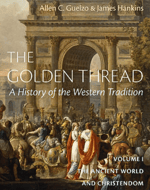
The Golden Thread: A History of the Western Tradition, Vol. 1: The Ancient World and Christendom
James Hankins traces the ways in which classical philosophy and Christian thought became intertwined to shape the foundations of the Western tradition. The Golden Thread examines how ancient ideas about virtue, governance, and the human person were developed within Christendom and shaped into a coherent moral and political vision over time. This intellectual inheritance, he argues, continues to influence modern debates about freedom, community, and the common good, offering insight into the enduring ideas that guide Western civilization.
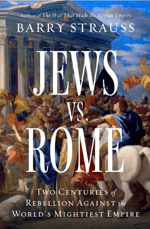 Jews vs. Rome: Two Centuries of Rebellion Against the World's Mightiest Empire
 Natural Rights, The Common Good, and the American Revolution (America at 250)
This volume explores how America's founders balanced individual rights with shared moral responsibility. Contributors show how debates about liberty, virtue, and legitimate government shaped the nation's political imagination and constitutional order, creating a framework that seeks to harmonize personal freedom with community flourishing.
 Jewish Roots of American Liberty: The Impact of Hebraic Ideas on the American Story
by Wilfred M. McClay and Stuart Halpern
Wilfred M. McClay and Stuart Halpern present 31 essays and documents that examine the ways in which the Hebraic tradition has informed the American founding and the nation’s political culture. They trace how concepts of covenant, law, moral responsibility, and human dignity shaped early American thought from the Puritans to the Revolution. The authors show how these principles contributed to a distinctive understanding of liberty that remains an enduring element of the American tradition.
 The Man Who Invented Conservatism: The Unlikely Life of Frank S. Meyer
Frank S. Meyer followed an unusual path to becoming a key architect of modern American conservatism. Daniel Flynn traces Meyer’s transformation from communist activist to influential conservative theorist and outlines the intellectual synthesis Meyer advanced. Flynn shows how Meyer’s emphasis on freedom, virtue, and limited government shaped a generation of thinkers and policymakers, offering a clear portrait of a figure whose legacy continues to influence public debate.
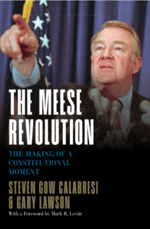
The Meese Revolution: The Making of a Constitutional Moment
by Steven Gow Calabresi and Gary Lawson
Steven Gow Calabresi and Gary Lawson examine the legal and political reforms advanced by Edwin Meese during his term as the 75th United States Attorney General under President Ronald Reagan. The authors argue that Meese’s commitment to originalism, federalism, and the separation of powers reshaped constitutional interpretation and guided a generation of legal thinkers. Calabresi and Lawson present Meese as the most important attorney general in American history and trace his enduring influence on American jurisprudence.
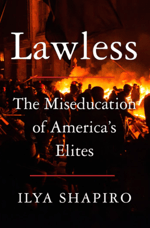
Lawless: The Miseducation of America's Elites
Ilya Shapiro examines how leading universities and law schools are reshaping America’s intellectual and civic life. He argues that these institutions have moved away from merit, open inquiry, and equal treatment, fostering a culture in which emotion and identity often outweigh evidence and debate. Shapiro contends that this shift has weakened public trust and stunted the development of future leaders, and he offers suggestions about what can be done to change the course of higher education.